Moving to Portugal is one of life's biggest decisions.
You don't have to make it alone.

From your first questions to your first day in Portugal, AllowMe combines legal expertise with practical guidance and genuine human support.

Tell us about your plans for Portugal and what you need help with. We’ll identify how AllowMe can assist and recommend the appropriate next step.

The best relocation is the one that feels effortless.That's what we're here for.

How We Help
Every relocation journey is different. Whether you're moving alone, with your family or for business, we help you navigate every stage with confidence, clarity and peace of mind.
Move & Settle
From planning your move to finding the right home—whether renting or buying—we guide you through every step with confidence and peace of mind.


Property & Lifestyle
Looking after your property and helping you enjoy life in Portugal long after your move.
Packages & Pricing
Every relocation journey is unique.That's why we offer flexible support, from individual services to complete end-to-end relocation management. Whatever your needs, we'll help you choose the level of assistance that's right for you.

Golden Visa & Qualified Investment
Strategic advice and end-to-end assistance for investors seeking residency through qualifying investment routes.
Legal & Tax Support
Clear legal guidance and trusted tax support, tailored to your personal and professional goals in Portugal.


Corporate Services
Helping companies and international professionals relocate to Portugal with coordinated immigration, onboarding and local support.
Health & Daily Life
From healthcare registration and education to everyday essentials, we help you settle into life in Portugal with confidence.

Connect With Us
Tell us briefly about your plans for Portugal, where you are moving from and what you would like help with (For example, Investor/D7 Visa/Executive Transfer/Property Search/New Tax Residency/Fiscal Plan).
E-mail: [email protected]Tel: +351927791934
AllowMe Portugal — Privacy Policy
Effective Date: 2025/09/01AllowMe Portugal (“AllowMe”, “we”, “our”, or “us”) is committed to protecting your privacy and ensuring the security of your personal information. This Privacy Policy explains how we collect, use, and safeguard the information you provide to us when using our website, social media pages, and services.1. Information We CollectWe may collect and process the following types of personal information:Contact details (name, email address, phone number);Service-related information (requests, preferences, documents you choose to share);Payment details (when applicable, processed securely by third-party providers);Website usage data (cookies, IP address, browsing data, for analytics and functionality).2. How We Use Your InformationWe use personal information strictly for:Providing and managing our relocation, integration, and concierge services;Communicating with you regarding your inquiries, bookings, or agreements;Coordinating with trusted partners to deliver specific services;Complying with legal and regulatory obligations (immigration, fiscal, or contractual requirements);Improving our website, social media presence, and client experience.3. Sharing Your InformationWe only share data with carefully selected partners (e.g., legal advisors, schools, clinics, real estate professionals) strictly for the purpose of delivering the services requested.We do not sell, rent, or trade your personal data to third parties.All partners are required to comply with data protection regulations (GDPR).4. Data Storage & SecurityPersonal data is stored securely, with access limited to authorized AllowMe staff and associates.We use appropriate technical and organizational measures to protect against unauthorized access, disclosure, or misuse.Data is retained only for as long as necessary to provide services or comply with legal obligations.5. Your Rights (Under GDPR)You have the right to:Access the personal data we hold about you;Request correction or deletion of your personal data;Restrict or object to the processing of your data;Withdraw consent at any time (where consent is the legal basis of processing);File a complaint with the Portuguese Data Protection Authority (CNPD).6. Cookies & Online TrackingOur website may use cookies and similar technologies to enhance user experience and analyze site performance. You may disable cookies in your browser settings, but some features may not function properly.7. Updates to This PolicyWe may update this Privacy Policy from time to time. Updates will be published on our website with a revised “Effective Date”.8. Contact UsIf you have any questions regarding this Privacy Policy or how we handle your personal data, please contact us:Controller: João Pedro Ferrão AllowMe Portugal
Email: [email protected]Phone: +351 927 791 934
Lisbon, Portugal

Our Services
Your investment demands a partnership that is strategic, comprehensive, and fully certified. We cover every detail of your relocation, from complex legal and tax compliance to family integration and daily life management.
- SEAMLESS RELOCATION & HOUSINGHome search and selection (renting or buying)
Assistance with contracts and utilities setup (water, electricity, internet)
Accompanied property visits
Support with moving in / delivery coordination- EXECUTIVE RELOCATION & CORPORATE ONBOARDINGFull 360º Onboarding: Seamlessly coordinating all visas, tax compliance, and relocation logistics, ensuring immediate executive productivity with a single point of contact for your HR team.- STRATEGIC LEGAL & TAX SUPPORTThe service provides comprehensive, end-to-end management of the entire relocation process to Portugal, guaranteeing a zero-friction transition with 100% legal compliance.Support spans from initial Visa acquisition (D2, D7, Digital Nomad, Golden Visa, etc.) and swift foundational setup (NIF, bank account opening, Social Security registration) to long-term strategy. This includes managing bureaucracy like vehicle legalization and driver’s license validation, and offering expert guidance on tax strategy, notably the new Fiscal Incentive for Scientific Research and Innovation (IFICI).Essential legal and complementary services extend well beyond arrival, covering the crucial processes of Residency Renewals, Family Reunification applications, and preparing for Portuguese Citizenship acquisition. Furthermore, corporate clients receive ongoing consultation for business compliance (legal and labor regulation).Professional Guarantee: All legal services (including immigration and contracts) are handled exclusively by duly licensed lawyers. All tax and accounting services are provided exclusively by certified accountants and tax advisors, ensuring the highest level of expertise and strict adherence to professional ethical standards.- LIFESTYLE & PROPERTY CAREProperty management (short or long-term)
Local representation (proxy for document handling, signatures)
Help sourcing reliable local services and professionals.
Mail, maintenance, and delivery coordination.GOLDEN VISA & QUALIFIED INVESTMENT ADVISORYWe provide end-to-end management for clients seeking Residency-by-Investment (ARI) in Portugal. Our service focuses on mitigating risk and ensuring full compliance through our certified network:* Investment Due Diligence: Consultation and connection to financial partners for selecting qualified investment funds (FCR, Venture Capital) compliant with AIMA/CMVM rules.* Application Management: Full coordination of all legal submissions to the AIMA (formerly SEF) for primary applicants and dependents.* Fiscal Risk Management (US Focus): Coordination with cross-border tax specialists to ensure the mandatory QEF (Qualified Electing Fund) guarantee is secured for U.S. investors, mitigating exposure to punitive PFIC taxation.* Compliance & Renewal: Management of document preparation and submissions for all five-year residency renewals and the final application for Portuguese Citizenship.All legal, tax, and accounting services are delivered exclusively by licensed and certified professionals (lawyers, accountants, and tax advisors), in a separated engagement coordinated by us, guaranteeing maximum expertise and ethical rigor.- FAMILY & EDUCATION INTEGRATIONPersonalized guidance on school options (public, private, international)
Assistance with enrollment processes and interviews
Help with after-school activities, tutoring, and extracurriculars
Advice on nurseries, childcare, and trusted babysitters
Support for special education needs (SEN) and psychological services
Parents: How Schools Work, Calendars, Parent-teacher Meetings- DEDICATED CONCIERGE SERVICESThe Dedicated Concierge service offers real-time support via WhatsApp for immediate assistance, ensuring total management of your routine in Portugal. This includes the thorough preparation and review of all official forms and documents, and the remote scheduling and booking of essential appointments and services. The concierge acts as a single point of contact, providing urgent support for unexpected situations (medical or legal) and offering ongoing, personalized lifestyle assistance tailored to each family's needs.
Ongoing lifestyle assistance tailored to each family’s needs
All legal, tax, and accounting services are performed by licensed and certified professionals (lawyers, accountants, and tax advisors) in separate engagements coordinated by us, ensuring maximum expertise, ethical rigor, and compliance with legal and OA requirements.
## Legal, Tax & Professional Support### Do AllowMe relocation packages include legal services?No. AllowMe relocation packages cover practical relocation, local coordination and settling-in support.When legal advice, document review, drafting or representation is required, those services are provided separately under a dedicated lawyer-client engagement.### Who provides legal services?Legal services are provided exclusively by lawyers registered with the Portuguese Bar Association.João Pedro Ferrão, founder of AllowMe Portugal, is a Portuguese lawyer registered with the Portuguese Bar Association and may provide legal services separately from the AllowMe relocation engagement.### What about tax and accounting matters?Tax and accounting advice is provided by appropriately qualified tax advisers and certified accountants.Where these services are needed, AllowMe coordinates the process with the relevant professionals so that the tax, legal and practical aspects of your relocation work together.### Can relocation, legal and tax support still be coordinated?Yes.Although legal, tax and accounting services are provided under separate professional engagements, AllowMe coordinates the different professionals and the practical aspects of your relocation, helping ensure that everything is addressed in a consistent and properly sequenced way.### Do I need to know in advance which type of support I need?No.Tell us what you are planning and what you already have in place. We can identify which matters are practical relocation tasks and which require legal, tax or other specialist support.---Legal, tax and accounting matters are handled separately by appropriately qualified professionals where required by applicable legal and professional rules, while AllowMe coordinates the overall process as part of your relocation.
Packages & Pricing
## The right level of support for your move to PortugalNo two relocations are exactly alike.Some clients need help with a few essential steps before arrival. Others want someone in Portugal to coordinate housing, administration and the entire settling-in process.Our relocation packages give you a clear starting point while remaining flexible enough to adapt to your circumstances.You don't need to decide which package is right before speaking with us.Tell us what you already have in place and where you need help. We will recommend the simplest level of support that makes sense.---# Essential Relocation## Get the essentials in placeDesigned for clients who are comfortable managing much of the move themselves but want help establishing the practical foundations for life in Portugal.Support may include:* NIF and essential administrative setup;
* assistance with opening a Portuguese bank account;
* utility and telecommunications setup;
* initial local orientation;
* coordination of essential services before or after arrival;
* practical document and appointment support.### From €950Best for: individuals or couples who already have accommodation or a clear relocation plan and mainly need practical setup assistance.---# Integrated Move## From planning to feeling settledFor clients who want broader coordination of their relocation — particularly housing, arrival and the first stages of everyday life in Portugal.Support may include:* property search coordination for renting or buying;
* communication with agents, landlords and service providers;
* viewing and move-in coordination;
* utilities and home setup;
* healthcare and insurance practicalities;
* school and family-related coordination where relevant;
* banking and administrative setup;
* local support during the settling-in period.### From €1,500The final scope depends particularly on the housing search, location, family requirements and level of local coordination involved.Best for: individuals and families who want one local point of contact to bring the different parts of the move together.---# Lifestyle & Integration## Local support after the moveRelocation does not always end when the boxes are unpacked.Lifestyle & Integration is designed for clients who want ongoing assistance with the practical realities of living in Portugal.Support can include:* priority assistance for everyday issues;
* Property Care and maintenance coordination;
* technicians, deliveries and local service providers;
* mail and administrative coordination;
* document and renewal reminders;
* assistance navigating local services;
* ongoing practical support as your needs change.### From €850/monthMinimum commitment: 3 monthsBest for: clients who value having a trusted local point of contact after settling in — particularly property owners, frequent travellers and families managing a busy international life.---# Prefer Help With Just One Thing?You do not need to purchase a package.Individual relocation services can also be arranged according to your needs, including:* NIF and administrative assistance;
* Portuguese bank account support;
* property search;
* utilities and home setup;
* healthcare and SNS practicalities;
* schools and family coordination;
* driving and mobility matters;
* local representation and practical coordination.Tell us what you need and we will provide a tailored quotation.---# Need Visa, Residency or Legal Support?Immigration, residency, nationality and other legal matters are available through our dedicated professional services.SEE VISAS, RESIDENCY & NATIONALITYFor tax or cross-border planning:SEE LEGAL & TAX SUPPORT---# Not Sure Where to Start?That is completely normal.A relocation can look like twenty separate tasks when you first begin. Usually, the first step is simply identifying:what is already under control, what needs attention and what you would rather not manage yourself.## Book a Free 15-Minute Discovery CallTell us where you are moving from, when you expect to arrive and what you already have organised.We will help you identify the level of support that makes sense for your move.BOOK A FREE 15-MINUTE DISCOVERY CALL

Client Success Stories
“I was overwhelmed by the bureaucracy of moving to Portugal, but AllowMe made everything smooth. From the NIF to finding the right apartment, they were exceptional.” James H. – London, UK“Moving my family from the U.S. to Cascais was stressful — until we found AllowMe. Their team handled every detail and made us feel at home.” Sarah T. – Boston, USA« Je voulais m’installer à Lisbonne mais je ne savais pas par où commencer. L’équipe d’AllowMe m’a accompagnée dans toutes les démarches. Merci pour votre professionnalisme et votre gentillesse. » Claire B. – Lyon, France“Dealing with local contracts and services was a nightmare until AllowMe stepped in. Their support was fast, personal, and truly reliable.” Johan V. – Amsterdam, Netherlands“We felt lost during our first months in Portugal. The concierge service gave us peace of mind — even helped with a last-minute plumbing issue!” Anna & Klaus M. – Berlin, Germany“I was relocating from Seoul alone and didn’t speak a word of Portuguese. AllowMe took care of everything — banking, health system, housing. I never felt alone.” Min J. – Seoul, South Korea

Certified Legal & Tax Confidence
Golden Visa & Qualified Investment Applications (ARI) – Dedicated legal and financial coordination.Visa & Residency application support (D7, D8, D2, Digital Nomad, etc.)NIF (Tax Identification Number) assistancePlain-language summaries and certified translations of contracts (rental, employment, services)Coordination of property purchase/sale documents and proceduresReview of legal documents by duly licensed lawyersReferrals to trusted immigration, real estate, and family law professionalsAssistance with notarization and Power of Attorney logisticsAdministrative support for SEF/AIMA appointments and paperworkOrientation on processes such as marriage, inheritance, or divorce (with licensed lawyers for legal representation)
We help you stay on top of Portugal’s tax and financial framework, always with certified accountants and tax advisors.Fiscal representation (via licensed professionals)Support with opening a Portuguese bank accountConnections to certified accountants for IRS, VAT, and company setupGeneral overview of Portuguese tax obligations (detailed tax advice provided by licensed professionals)Social Security registration support for freelancersCoordination with advisors on international tax treaties and pensionsNIF requests for dependentsBusiness registration & CAE code selection (via certified accountants)Vehicle import taxes and customs support (in partnership with tax advisors)Driver’s license exchange coordination (IMT)Note: Non-Habitual Resident (NHR) tax regime was revoked
All legal, tax, and accounting services are performed by licensed and certified professionals (lawyers, accountants, and tax advisors) in separate engagements coordinated by us, ensuring maximum expertise, ethical rigor, and compliance with legal and OA requirements.

AllowMe Guides and Resources

Visas and Residence Permits in Portugal: The Essential Guide 2026
Moving to Portugal should feel exciting — not like a legal examination.You do not need to understand every immigration rule before you start. But you do need to choose the right route, understand the main requirements and make a few important decisions in the right order.This guide gives you the essentials.---## Visa and Residence Permit: What Is the Difference?For most non-EU citizens moving to Portugal, the process begins before arrival.A residence visa is normally obtained through the Portuguese consular system abroad and allows you to enter Portugal for the purpose of establishing residence.The residence permit is then issued in Portugal through AIMA under the applicable legal route.Different rules apply to EU/EEA/Swiss citizens and their family members.The important point is simple:your immigration route should normally be identified before you organise the rest of your move around it.Housing, income, employment, family arrangements and timing can all affect the right strategy.---# Which Route May Apply to You?## D1 — Working for a Portuguese EmployerGenerally appropriate when you have an employment relationship, or qualifying commitment to one, with an employer in Portugal.The employment documentation and the overall conditions of the proposed move need to support the application.---## D2 — Entrepreneur or Independent ProfessionalRelevant to people intending to develop a business or independent professional activity connected with Portugal.There is no universal “minimum D2 investment” that makes an application automatically viable.The real questions usually concern the credibility of the activity, available resources, contracts or business structure and whether the proposed project makes sense as a whole.---## D3 — Highly Qualified ActivityDesigned for qualifying highly skilled professional, academic, research or similar activity.Depending on the circumstances, other highly qualified migration regimes may also be relevant.---## D4 — StudyFor applicants admitted to qualifying study or higher-education programmes in Portugal.The duration and conditions of residence may differ from ordinary employment or income-based routes.---## D7 — Retirement and Stable Own IncomeThe D7 remains one of the main routes for retirees and people who can support themselves through stable and regular income.Typical situations may involve pensions, property income, investment income or other sufficiently stable resources.For 2026, the Portuguese minimum monthly wage in mainland Portugal is €920, which is an important reference in the assessment of means of subsistence.But the figure alone does not decide a D7 application.Where the income comes from, how regular it is, how it is documented and the applicant's family circumstances can be just as important as the amount.Savings can strengthen a financial position, but they should not automatically be treated as equivalent to recurring income.---## D8 — Remote Workers and Digital NomadsThe D8 is intended for employees and independent professionals carrying out remote professional activity for employers or clients outside Portugal.One important requirement is evidence of average professional income during the previous three months equivalent to at least four Portuguese minimum monthly wages.For 2026, that reference is:€3,680 per monthApplicants must also be able to demonstrate the underlying employment or professional relationship and the other requirements applicable to the visa.A frequent source of confusion is the distinction between D7 and D8.Passive or own income and remote professional income are not simply interchangeable. Choosing between the two requires looking at the nature of the income, not just its value.---# What About the Job Seeker Visa?Portugal changed this regime in 2025.The legislation now provides for a Qualified Job Seeker Visa, directed towards applicants with specialised technical skills seeking highly qualified professional activity.Because the practical application of this route depends on the applicable regulatory and consular framework, it is particularly important to verify the current requirements before relying on it as a relocation strategy.---# Moving With Your FamilyFamily relocation deserves to be planned at the same time as the principal applicant's immigration route.Portuguese family-reunification rules changed significantly in 2025 and now include waiting periods in a number of situations, together with important exceptions.This means that two applicants who appear to have similar family circumstances may not necessarily have the same timeline.If you are moving with a spouse, partner, children or dependent relatives, family strategy should be considered before the principal visa application is finalised.---# EU Citizens and Their Family MembersEU/EEA/Swiss citizens do not use the D-visa system.An EU citizen establishing residence in Portugal will generally register under the EU free-movement regime.Non-EU family members accompanying or joining an EU citizen follow a specific EU-family-member residence procedure.This is legally different from ordinary family reunification and should not be confused with it.---# Golden Visa / ARIPortugal's residence-by-investment programme remains available, although real-estate acquisition is no longer a qualifying investment route.Qualifying investment categories remain available in areas such as eligible investment funds, scientific research, culture, job creation and certain company investments.The ARI is particularly different from ordinary residence routes because of its investment structure and comparatively limited physical-presence requirements.Investment, immigration and tax analysis should always be kept separate: an investment may qualify for immigration purposes without necessarily being the best financial or tax decision for a particular investor.---# Permanent Residence and Citizenship Are Not the Same ThingAfter sufficient qualifying legal residence, a resident may become eligible for permanent residence, subject to the statutory conditions.Portuguese nationality follows a separate regime.Under the law currently in force, naturalisation based on residence generally requires 7 years of legal residence for citizens of Portuguese-speaking countries and EU Member States, and 10 years for other nationals, together with additional statutory requirements.Citizenship should therefore be treated as a separate long-term decision rather than an automatic consequence of obtaining a residence permit.---# What Documents Will You Need?There is no useful universal checklist for every applicant.Most residence routes will involve evidence concerning areas such as:* identity and criminal record;
* accommodation;
* financial means;
* health or travel coverage;
* and the particular basis of the application — employment, professional activity, income, study, investment or family relationship.The documents themselves are only part of the equation.The important question is whether they prove the right facts, in the right form, for the right immigration route.That is where many apparently simple applications become individual.---# The Best First Step Is Not Collecting DocumentsIt is understanding your route.Before signing a long-term lease, reorganising income, leaving employment, transferring substantial funds or building a visa file, it is worth checking that all those decisions fit together.For some people the answer is straightforward.For others, a small difference — the source of income, the structure of a business, the nationality of a spouse, the intended timing or the type of accommodation — can change the appropriate route.You do not need to solve all of that alone.## Planning a Move to Portugal?Start with a short conversation.Book a Free 15-Minute Discovery CallTell us where you are coming from, what you hope to do in Portugal and approximately when you want to move.We will help identify what type of support you may need and the appropriate next step.Reviewed September 2026. Immigration rules and administrative practice can change, and individual circumstances matter.
Guide to Living and Settling in Portugal — 2026 Edition
# Guide to Living and Settling in Portugal — 2026 EditionMoving to Portugal is about much more than obtaining a visa.The first weeks and months involve a series of practical decisions — housing, banking, tax registration, healthcare, social security, schools, utilities and everyday administration.None of these is particularly intimidating on its own. The challenge is knowing what applies to you, what should be done first and what can safely wait.This guide gives you the practical picture.---# 1. Start With the Right SequenceThere is no universal relocation checklist that works in exactly the same order for everyone.A retiree moving from the United States, a remote-working family from the UK, an EU citizen relocating from France and an entrepreneur establishing a business in Portugal may all need different things at different stages.As a general principle, think in five layers:Residence → Housing → Financial & Administrative Setup → Daily Life → IntegrationGetting the sequence right prevents duplicated work, unnecessary travel and last-minute surprises.---# 2. Your Portuguese Tax Number — NIFThe Número de Identificação Fiscal (NIF) is one of the first administrative identifiers most newcomers will need.It is used across Portuguese life, including taxation, financial transactions and many contracts and administrative procedures.Foreign nationals can obtain a NIF before becoming Portuguese residents, although the procedure and any representation requirements depend on their place of residence and circumstances.The official issuance of a NIF is free. Professional representation or assistance, where used, is a separate service.A useful principle is:Get your NIF early, but coordinate it with your wider relocation and tax-residence plan.Changing from non-resident to resident status later has tax and administrative consequences that should not be treated as a mere change of address.---# 3. Opening a Portuguese Bank AccountA Portuguese bank account is extremely useful for day-to-day life and is often requested in connection with housing, utilities, direct debits and other local arrangements.It may also be relevant to some immigration processes.Portuguese banks apply their own identification, compliance and source-of-funds requirements. The documentation requested can therefore vary significantly between institutions and between resident and non-resident clients.Common areas banks examine include:* identity;
* NIF;
* residential address;
* professional or financial situation;
* source of income or funds.Opening an account from abroad may be possible in some circumstances, but should not be assumed.Choosing the right bank and preparing the file correctly often matters more than simply choosing the nearest branch.---# 4. Finding Your HomeFor many newcomers, housing is the most demanding part of the move.The market varies substantially between Lisbon, Cascais, Porto, the Algarve, the Silver Coast and inland Portugal, and landlords may be cautious when a foreign applicant has no Portuguese employment or rental history.Before committing to a property, it is important to understand:* who owns or is legally entitled to lease it;
* the duration and termination rules of the proposed lease;
* amounts requested as rent, advance payments, and deposit;
* what expenses are included;
* whether the agreement suits any immigration or administrative purpose for which you intend to use it.A property can be attractive and still be the wrong relocation choice.Do not transfer significant funds merely because the market feels competitive.The legal and practical quality of the housing arrangement matters.For more detail, see our Renting a Home in Portugal — Essential Expat Guide.---# 5. Residence Formalities After ArrivalYour immigration or registration obligations depend on your nationality and residence route.Non-EU citizens who enter Portugal under a residence visa normally proceed to the corresponding residence-permit stage through AIMA.EU/EEA/Swiss citizens follow a different regime. Those establishing residence for more than three months generally formalise their status through the appropriate EU registration procedure in their municipality.Non-EU family members of EU citizens have their own residence-card procedure.These regimes should not be confused with one another.For the immigration side of your move, see our Visas and Residence Permits in Portugal — Essential Guide 2026.---# 6. Social Security — NISSThe Número de Identificação da Segurança Social (NISS) identifies a person within the Portuguese Social Security system.It is particularly relevant when you work in Portugal, become self-employed, establish certain professional activities, or otherwise enter the Portuguese social security system.It should not be treated as something every newcomer necessarily has to obtain at exactly the same moment.Foreign citizens can apply for a NISS under the applicable procedure, and the supporting evidence depends on their residence and professional situation.In some situations, foreign citizens already living in Portugal may also have access to integrated procedures involving NIF, NISS and SNS identification.The practical question is therefore not simply:“Do I need a NISS?”but:“When do I need it, and what activity or status is it connected to?”---# 7. Healthcare and the SNSPortugal has a public healthcare system — the Serviço Nacional de Saúde (SNS) — alongside a substantial private healthcare sector.Foreign nationals legally resident in Portugal can obtain a Portuguese health-user number and register within the SNS framework.However, having a Número de Utente does not, by itself, mean that every healthcare cost is automatically covered in every situation.Access and coverage can depend on residence and other applicable rules.Many newcomers also maintain or purchase private health insurance, particularly during the transition period or to obtain faster access to certain consultations and specialists.The appropriate combination of public healthcare, private insurance and — for eligible European residents — EU coordination mechanisms depends on the individual situation.---# 8. Moving With ChildrenFor families, schools should be considered early — often at the same time as housing.Portugal offers public, private and international education.Public schooling follows the Portuguese education system and school placement can be influenced by residence and available capacity.International and private schools operate their own admission procedures, calendars, fees and availability.If education is important to your choice of neighbourhood, choose school and housing together rather than sequentially.That can prevent finding the perfect home in the wrong catchment area — or discovering too late that the preferred school has no places available.---# 9. Driving in PortugalForeign driving licences are an area where one-size-fits-all advice is particularly unreliable.The rules depend on:* the country that issued the licence;
* whether it is an EU/EEA licence;
* international conventions or bilateral agreements;
* the driver's age;
* when the licence was issued or renewed;
* whether the driver wishes simply to drive in Portugal or obtain a Portuguese licence.For example, qualifying licences from a number of OECD and CPLP countries may continue to be used in Portugal even after the holder becomes resident, provided the legal conditions are met.EU/EEA licences follow another regime.Other licences may require exchange, and the applicable deadlines and examination requirements vary.Do not assume that “foreign licence” automatically means “exchange immediately”.The position should be checked according to the actual licence.Importing a vehicle is a separate matter and may involve registration, customs, and Portuguese vehicle tax considerations.---# 10. Tax Residence: Do Not Wait for Day 184One of the most common misconceptions among newcomers is that Portuguese tax residence starts automatically — and only — after spending 183 days in Portugal.The reality is more nuanced.A person may become Portuguese tax resident by spending more than 183 days in Portugal during the relevant period, but residence may also arise earlier where the person has a home in Portugal in circumstances indicating an intention to maintain and occupy it as their habitual residence.Portuguese tax residents are generally subject to Portuguese taxation on worldwide income, subject to applicable treaties and other rules.This means the timing of:* moving into a permanent home;
* selling assets abroad;
* receiving pensions;
* exercising share options;
* distributing dividends;
* changing employment;
* restructuring investmentscan matter.Tax planning is most useful before the move, not after tax residence has already begun.Portugal's former NHR regime is no longer generally available to new arrivals. Specific existing and transitional cases remain, and a different incentive — IFICI — applies to certain qualifying activities.These issues are covered separately in our Portugal Tax & Investment Guide 2026.---# 11. Utilities, Internet and Your New HomeOnce housing is secured, the practical setup begins.You may need to arrange or transfer:* water;
* electricity;
* gas, where applicable;
* internet;
* mobile services.Water arrangements can depend on the municipality.Electricity and telecommunications operate in competitive markets, so in many cases you can choose between providers.Contracts may include commitment periods, installation conditions and cancellation rules, so the cheapest headline offer is not necessarily the best choice.A smooth move-in also depends on timing.An apartment without internet for ten days may be inconvenient for anyone — and a serious problem for someone whose work depends on remote connectivity.---# 12. What Does It Cost to Live in Portugal?There is no honest single answer.Portugal is no longer uniformly inexpensive, and housing in particular can vary dramatically according to location.A realistic relocation budget should consider:* housing and deposit requirements;
* utilities;
* groceries and dining;
* transport or car ownership;
* healthcare and insurance;
* schools, where applicable;
* leisure and travel;
* taxation;
* initial relocation and setup costs.A couple living in central Lisbon, a family in Cascais, and a retiree living in a smaller inland town will have very different budgets.For that reason, we prefer not to publish a generic “Portugal costs €X per month” figure that may create a false expectation.The useful question is what your intended life in Portugal is likely to cost.---# 13. The Part That Cannot Be Put on a ChecklistSettling successfully is not only administrative.You are changing country, routines, language, healthcare, shops, neighbourhood, social circle and often your relationship with time itself.Portugal can feel immediately welcoming — and still take time to become home.Learning some Portuguese helps enormously, even when English is widely spoken in your daily environment.Understanding local habits, building relationships, and allowing yourself time to adapt are as important as completing another form.A successful relocation is not finished when the paperwork is finished. It is finished when everyday life starts to feel normal again.---# Before You Move: Think in This OrderYou do not need to complete twenty tasks at once.Start by answering five questions:1. Can I legally establish residence in Portugal under the route I intend to use?2. Where am I going to live, and does that housing arrangement work for my wider plan?3. When will my Portuguese tax residence begin, and are there important financial decisions to make before then?4. What administrative setup do I actually need — NIF, bank account, NISS, SNS, schools, driving licence, utilities?5. Which parts can I comfortably manage myself, and where would local support save time, risk, or unnecessary travel?Once these are clear, the move becomes considerably easier to manage.---# You Don't Have to Organise Everything AloneSome people need help with only one or two steps.Others prefer someone in Portugal to coordinate the entire landing process — from NIF and banking to housing, utilities, healthcare, schools and settling in.Both approaches are perfectly valid.The important thing is to know what you are taking on before the move begins.## Planning Your Move to Portugal?Book a Free 15-Minute Discovery CallTell us where you are coming from, who is moving with you, approximately when you plan to arrive and what you already have in place.We will help you understand where AllowMe can make the process easier and what the appropriate next step may be.Reviewed September 2026. Administrative procedures and requirements may change, and individual circumstances matter.
Renting a Home in Portugal: The Essential Expat Guide
Moving to Portugal is a dream for many, but finding the perfect home can be the most challenging part of your transition. The rental market in Portugal, particularly in major cities, is competitive and has specific rules that expats must master. Prepare for the process with confidence and efficiency.🔹1. Key Requirements: Get Your Documents ReadyTo sign a legal Rental Contract (Contrato de Arrendamento) in Portugal, landlords (and the law) require strict documentation. Don't waste time:NIF (Número de Identificação Fiscal): This is the fundamental document for any transaction. You must obtain it as soon as possible.Proof of Income: Expect to be asked for bank statements and/or employment contracts from your country of origin. The lack of a local income history often leads to demands for high security deposits (1 to 2 months) and advanced rent payments (3 to 12 months).Guarantor (Fiador): It is common for landlords to request a guarantor with residence and income in Portugal. If you don't have one, the demand for more advanced rent is almost certain.Rental Contract: Always demand the property's Licence of Use (Licença de Utilização) and ensure your contract is registered with the tax authorities (Finanças) so you can get the monthly rent receipts essential for your tax obligations.🔹2. Rental Cost Overview Across 5 Major Regions:The rent price in Portugal varies drastically depending on location, size, and proximity to the sea or employment centers.Region T1/ T2 Typical Monthly Rent Range (€):
Greater Lisbon (incl. Cascais, Sintra) 900€ to 2,500€+
Greater Porto (incl. Vila Nova de Gaia) 800€ to 1,700€+
Coastal North/Centre (Braga, Coimbra, Aveiro) 600€ to 1,200€
Algarve (Coastal) 800€ to 1,600€+
Inland Regions and Islands (Except Fu nchal) 450€ to 850€Note: These values are indicative of the current market. Higher prices apply to new, furnished properties, or those in premium locations (e.g., Avenida da Liberdade, Chiado, or beachfront).Factors Influencing the Price:Central Location: Proximity to urban centers (CBD) and public transport networks (Metro, train) drives up values in Lisbon and Porto.
Proximity to the Coast/Beach: The Algarve, the Lisbon coast (Cascais), and the North (Porto/Matosinhos) have significantly higher rents.
Property Condition: Furnished homes, with amenities (garage, pool, elevator) or recently renovated, carry a substantial premium.🔹3. Simplify Your Relocation with AllowMe
For the expat, the difficulty of searching and negotiating remotely, without local market knowledge, is a real issue.AllowMe is your ideal partner to ensure a smooth transition. We offer a 360º set of services covering every step of your move, allowing you to focus on the essentials:
Portugal Tax & Investment Guide — 2026 EditionFor New Residents, Entrepreneurs and Global Investors
Moving to Portugal can change much more than where you live.It can change where your salary is taxed, how foreign investments are reported, how a pension is treated, what happens when you sell an asset and even how a business established abroad interacts with another tax system.That does not mean moving to Portugal has to become a tax exercise.It means that some decisions are better made before the move than after it.This guide explains the framework you should understand before establishing tax residence or making a substantial investment in Portugal.---# 1. Immigration Residence and Tax Residence Are DifferentA Portuguese residence visa or residence permit does not, by itself, determine your tax position.Likewise, becoming tax resident does not depend only on having spent 183 days in Portugal.Under Portuguese rules, an individual can generally become tax resident if:* they remain in Portugal for more than 183 days, consecutive or otherwise, within the relevant 12-month period; or
* they have a home in Portugal in circumstances indicating an intention to maintain and occupy it as their habitual residence.This distinction matters.Someone can therefore become Portuguese tax resident earlier than expected.Once resident, Portugal generally taxes the individual on worldwide income, subject to applicable exemptions, tax treaties and specific regimes.For non-residents, Portuguese taxation is generally limited to Portuguese-source income.Do not plan your move around “day 184” alone.The date on which tax residence begins can affect transactions carried out before or after arrival.---# 2. Why Timing MattersBefore becoming Portuguese tax resident, it can be worth reviewing any significant event already planned for the same period.For example:* sale of a business or company shares;
* sale of a foreign property;
* exercise of stock options;
* receipt of a substantial bonus;
* pension commencement;
* dividends or distributions;
* restructuring of an investment portfolio;
* transfer or sale of cryptocurrency or other assets;
* movement of a business or management functions;
* large gifts or succession planning.This does not mean that these events should automatically be accelerated, postponed or restructured.It means their Portuguese consequences should be understood before the transaction takes place.Tax planning is most useful while there is still something to plan.---# 3. What Happened to the NHR Regime?Portugal's former Non-Habitual Resident — NHR regime was repealed for new entrants from 2024, subject to transitional rules.People who validly obtained NHR status continue to benefit from it during the applicable period.There are also transitional cases governed by the previous legislation.But for someone planning a new move to Portugal in 2026:NHR should not normally be treated as the starting point of the tax analysis.This is important because much online information about moving to Portugal still describes the country using a tax regime that is no longer generally available to new residents.Portugal remains attractive for many reasons.The tax analysis has simply become more individual.---# 4. IFICI — Portugal's Incentive for Scientific Research and InnovationPortugal introduced the Incentivo Fiscal à Investigação Científica e Inovação — IFICI after the end of the general NHR regime.It is sometimes described informally as “NHR 2.0”.That description can be misleading.IFICI is considerably more targeted.It is available to qualifying individuals who:* become Portuguese tax resident;
* were not Portuguese tax residents during the previous five years;
* carry out one of the activities specifically covered by the law;
* and meet the remaining statutory conditions.Eligible situations include certain activities connected with areas such as:* higher education and scientific research;
* research and development;
* recognised technology and innovation entities;
* qualifying highly skilled professions in certain companies;
* certified startups;
* qualifying investment-related entities and activities.Eligibility depends not only on the person's profession.The employer, entity, activity, qualifications and sometimes the economic characteristics of the business can also matter.---# 5. What Does IFICI Provide?Where the conditions are satisfied, qualifying Portuguese-source employment and professional income may benefit from a special 20% IRS rate.The regime can apply for up to 10 consecutive years, subject to continuing compliance with its requirements.Foreign-source income generally benefits from an exemption under the IFICI framework, with important exceptions.In particular:foreign pension income does not benefit from the general IFICI foreign-income exemption.Special rules also apply to income connected with jurisdictions considered to have a clearly more favourable tax regime.IFICI is therefore potentially valuable — but it is not a general expat tax exemption.A digital nomad, entrepreneur, executive or highly qualified professional should not assume eligibility merely because the work sounds innovative or specialised.Eligibility needs to be checked against the actual statutory category and the entity through which the activity is performed.---# 6. IFICI Has a Registration TimelineIFICI does not simply apply automatically because an individual appears to meet the substantive conditions.The registration procedure and confirmation of the qualifying activity are important.As a general rule, the application should be made by 15 January of the year following the year in which Portuguese tax residence begins.Late registration may still allow access to the regime in some circumstances, but only for the remaining part of the original statutory period.That makes early identification valuable.If IFICI could be relevant to your move, it should be considered before or at the time you become resident, not several years afterwards.---# 7. Foreign Income Does Not Disappear When You MoveA Portuguese tax resident generally has to report worldwide income.That can include:* salary earned abroad;
* foreign self-employment income;
* pensions;
* rental income from foreign properties;
* dividends;
* interest;
* investment gains;
* other foreign-source income.Portugal has an extensive network of Double Taxation Agreements.These treaties can determine which country has the right to tax particular income and how double taxation is relieved.But a tax treaty does not normally mean:“I paid tax abroad, so Portugal does not need to know about it.”The income may still need to be reported in Portugal, with double taxation relieved under the applicable treaty or domestic credit mechanism.The exact result depends on the type of income and the treaty concerned.---# 8. Keep the Two Countries in the Same ConversationCross-border tax problems often arise because advice is obtained separately.A tax adviser in the country of origin understands that system.A Portuguese accountant understands Portugal.Both may be completely correct — and the combined outcome may still not have been analysed.For a significant relocation, the useful question is not merely:“What tax do I pay in Portugal?”It is:“What happens to this income, asset or transaction in both countries?”This is particularly important for people moving from jurisdictions that continue to impose significant reporting or taxation obligations after relocation.---# 9. A Special Note for U.S. Citizens and InvestorsU.S. citizens and certain other U.S. taxpayers remain subject to U.S. tax and reporting rules even while resident in Portugal.This makes investment selection especially sensitive.For example, an investment fund that is perfectly legitimate and appropriate under Portuguese law may potentially fall within the U.S. Passive Foreign Investment Company — PFIC rules.PFIC treatment can create additional taxation and reporting complexity.A Qualified Electing Fund — QEF election may be relevant in some situations where the necessary information is available, but it is not a universal or mandatory “guarantee” and should not be presented as such.U.S. persons investing in Portuguese or other non-U.S. funds should therefore obtain appropriate cross-border tax advice before investing.Immigration eligibility, investment quality and U.S. tax efficiency are three separate questions.A fund should satisfy all three where they matter to the investor.---# 10. Investing in Portugal Is Not the Same as Obtaining ResidencePortugal welcomes foreign investment, but most investments do not automatically create immigration rights.Likewise, an investment that qualifies for an immigration programme is not automatically a good investment.These decisions should be separated:### Is the investment economically sound?Risk, return, liquidity, costs, management and exit.### Is it suitable for your tax position?Portugal and, where relevant, your country of origin.### Does it qualify for the intended immigration route?Only where residence by investment is part of the objective.An investment should never become attractive merely because it comes with an immigration label.---# 11. Golden Visa / ARI in 2026Portugal's Residence Permit for Investment Activity — ARI, commonly known as the Golden Visa, remains available.However:direct or indirect real-estate investment is no longer a qualifying ARI route.Current qualifying routes include, among others:* creation of at least 10 jobs;
* qualifying scientific research — generally from €500,000;
* qualifying artistic production or cultural heritage — generally from €250,000;
* qualifying non-real-estate collective investment funds — generally from €500,000;
* qualifying investment in Portuguese companies combined with statutory employment requirements — generally from €500,000.Some investment thresholds can be reduced in qualifying low-density territories where the law provides for it.The ARI remains attractive to some investors because it requires significantly less physical presence in Portugal than ordinary residence routes.But the correct sequence is:immigration assessment → investment assessment → tax assessment → implementation.Not the other way around.---# 12. Buying Property in PortugalYou do not need a Golden Visa to buy property in Portugal.Foreign nationals can purchase Portuguese real estate independently of the immigration route they use.Property acquisition can involve several taxes and ongoing costs, including:* IMT — Municipal Property Transfer Tax;
* Stamp Duty;
* IMI — annual Municipal Property Tax;
* potentially AIMI — Additional Municipal Property Tax, depending on the property portfolio and circumstances.In 2026, Portugal introduced an important additional rule for certain residential acquisitions by non-residents.As a general rule, residential property acquired by a non-resident can be subject to a 7.5% IMT rate, although statutory exceptions apply.One important exception concerns a buyer who subsequently becomes Portuguese tax resident within the legally prescribed period.This makes the timing between property purchase and relocation potentially significant.The tax cost of purchasing a €300,000 apartment before moving may therefore not necessarily be the same as purchasing it after establishing the relevant status.That is exactly the kind of issue worth checking before signing the purchase contract.---# 13. Property Is an Investment — and Also a HomeFor many clients, Portuguese property plays two roles.It is an asset.And it is where they intend to live.Those two objectives do not always point to the same property.Before buying, consider separately:* whether the property fits your life;
* whether the title and planning position are sound;
* the true acquisition cost;
* ongoing taxes and condominium expenses;
* rental potential, if relevant;
* financing;
* resale liquidity;
* succession and family ownership;
* tax consequences in other countries.A beautiful property can still be the wrong investment.
A good investment can still be the wrong home.---# 14. Foreign Companies and Business OwnersMoving personally to Portugal does not necessarily require moving your company to Portugal.But the move can affect how the company is viewed.Relevant questions may include:* where the business is effectively managed;
* whether it creates a Portuguese taxable presence;
* where employment is exercised;
* payroll and Social Security;
* dividends and remuneration;
* transactions between related companies;
* VAT;
* double-tax treaty rules.Business owners should therefore avoid treating personal relocation and corporate tax planning as unrelated projects.They are separate legal questions.But they often interact.For more detail, see our Doing Business and Working in Portugal — 2026 Edition.---# 15. Pensions and Retirement IncomePortugal remains an attractive retirement destination.But the tax treatment of foreign pensions is no longer accurately summarised by the old statement:“Move to Portugal and pay 10% under NHR.”That treatment remains relevant only to taxpayers who validly benefit from the applicable legacy NHR rules.A new resident in 2026 needs to consider:* the ordinary Portuguese tax treatment;
* the applicable double-tax treaty;
* the type of pension;
* the country from which it is paid;
* whether other retirement accounts are treated as pensions at all under Portuguese law.Retirement planning should therefore happen before distributions begin where possible.---# 16. Do Not Move an Investment Portfolio BlindlyChanging country can change the tax treatment of investments that have existed for years.This is particularly relevant to:* company shares;
* investment funds;
* retirement accounts;
* trusts;
* stock options;
* carried interests;
* foreign insurance wrappers;
* cryptocurrency;
* concentrated holdings in a family company.The solution is not necessarily to sell, restructure or transfer anything.Often, the correct solution is simply to understand the consequences and keep the existing structure.But that conclusion should ideally be reached before Portuguese tax residence begins.---# 17. Estate and Family Planning Matter TooInternational relocation can affect more than annual income tax.Property ownership, matrimonial regimes, succession law, wills, gifts and inheritance may interact across jurisdictions.For clients with significant assets, children in different countries, previous marriages, foreign trusts or businesses, this can be as important as the annual tax return.A relocation plan should therefore sometimes include not only:Where will I live?but also:How will my assets and family arrangements work once I do?---# 18. Five Questions to Ask Before Becoming Portuguese Tax ResidentYou do not need to become a Portuguese tax expert.Before moving, however, try to answer these five questions:1. When am I likely to become Portuguese tax resident?2. What income and assets will Portugal see once I am resident?3. Do I qualify for IFICI or another relevant tax regime?4. Are there transactions I am already planning that should be reviewed before the move?5. Do my Portuguese and home-country tax positions work together?If those questions are answered early, much of the anxiety disappears.---# A Good Tax Strategy Should Support Your Life — Not Run ItTax matters.But most people do not move to Portugal because of an IRS article.They move for a different life.The objective of sensible tax planning is not to make every decision around tax.It is to make sure tax does not unexpectedly undermine the decisions you wanted to make anyway.Understand the important consequences. Make the decisions that matter. Then get on with living here.## Planning a Move or Investment in Portugal?Book a Free 15-Minute Discovery CallTell us where you are moving from, when you expect to relocate a
Doing Business and Working in Portugal — 2026 EditionFor Entrepreneurs, Freelancers, Remote Workers and International Professionals
Portugal can be a very attractive place to work, build a business or manage an international career.But one distinction is essential from the beginning:living in Portugal, working in Portugal and owning a business in Portugal are three different legal questions.Getting those three aligned early can make the transition surprisingly straightforward. Getting them out of sequence can create unnecessary immigration, tax, employment or Social Security problems later.This guide gives you the essential framework.---# 1. Start With Your Status — Not With the CompanyBefore opening an activity or incorporating a company, clarify four things:1. Do you have the right to live and work in Portugal?2. Will you be an employee, an independent professional or a business owner?3. Where will you and the business become taxable?4. Does the activity require a licence, professional recognition or other regulatory approval?These questions are connected.For example, incorporating a Portuguese company does not, by itself, give a non-EU founder the right to live or work in Portugal.Likewise, continuing to work for a foreign company after moving to Portugal does not necessarily mean that Portuguese tax, employment or Social Security rules can simply be ignored.The right structure starts with the person and the activity — not with the registration form.---# 2. Working as an Employee in PortugalPortuguese employment law provides a substantial framework of employee protection.Foreign workers legally working in Portugal are generally entitled to the same employment rights and subject to the same duties as Portuguese workers.In 2026, the national minimum monthly wage in mainland Portugal is:€920As a general rule, normal working time cannot exceed:8 hours per day / 40 hours per weekEmployees are generally entitled to at least:22 working days of paid annual leavePortuguese employment arrangements may also involve holiday and Christmas allowances, Social Security contributions and rules governing working time, parental rights, sickness, termination and other employment conditions.Collective bargaining agreements may modify or supplement the general statutory rules in particular sectors.For an international employee or employer, the important point is not to assume that a contract drafted abroad will necessarily deal adequately with employment performed from Portugal.---# 3. Remote Work From PortugalRemote work is now part of everyday international mobility — but “remote” does not mean legally location-free.If you live in Portugal while working for:* a foreign employer;
* your own foreign company;
* international clients;
* or a group of companies abroad,your physical presence and the way the activity is organised may create Portuguese tax, Social Security, immigration or employment-law consequences.This does not mean that every remote worker needs a Portuguese company.Often they do not.It means that the personal residence position, employment structure and business structure should be looked at together.For non-EU nationals, immigration status is also relevant. The D8, for example, is designed for qualifying remote professional activity connected with employers or clients outside Portugal.---# 4. Freelancers and Independent ProfessionalsPortugal allows individuals to work as independent professionals without incorporating a company.This normally involves registering professional activity with the Portuguese Tax Authority and complying with the corresponding tax and Social Security obligations.You will often hear the expression “recibos verdes”.It is important to understand what this means:“Recibos verdes” are an invoicing and tax mechanism used by independent professionals — they are not a legal form of company.Independent activity may suit consultants, creatives, technicians, freelancers and other professionals, but it is not automatically the best structure for every business.Among the issues that can matter are:* expected turnover;
* type of clients;
* business expenses;
* VAT treatment;
* Social Security;
* liability;
* whether employees will be hired;
* whether the activity is genuinely independent;
* cross-border income.Independent workers are also generally required to have occupational accident insurance.For foreign professionals, immigration status must allow the intended activity.---# 5. When Does a Company Make More Sense?For some activities, a separate company is more appropriate.Common Portuguese corporate structures include:### Sociedade Unipessoal por Quotas — Unipessoal Lda.A limited liability company with one shareholder.### Sociedade por Quotas — Lda.A limited liability company with two or more shareholders.### Sociedade Anónima — S.A.A share company generally designed for larger or more complex structures.There are other possible legal forms, but these cover many ordinary business situations.The correct choice depends on much more than incorporation cost.It can affect:* liability;
* management and control;
* relationship between partners;
* financing;
* taxation;
* succession;
* sale of the business;
* remuneration of owners and managers.Portugal offers online and in-person mechanisms for company incorporation, and foreign founders can establish Portuguese companies subject to the applicable identification and registration requirements.But easy incorporation does not mean that the structure should be chosen without planning.The company can be created quickly. Choosing the wrong company can take much longer to undo.---# 6. Corporate Tax in 2026For taxation periods beginning in 2026, the general Portuguese Corporate Income Tax — IRC — rate is:19%Qualifying SMEs and Small Mid Caps carrying on an eligible economic activity may benefit from a 15% rate on the first €50,000 of taxable income, with the general rate applying to the excess.Other taxation may also be relevant, including municipal or State surtaxes where applicable.VAT may apply according to the nature of the activity, turnover and domestic or cross-border transactions.But the headline IRC rate is only one part of the picture.For an entrepreneur, the real tax cost can also depend on:* how money is taken from the company;
* salary versus distributions;
* personal tax residence;
* Social Security;
* international income;
* related companies abroad;
* double-tax treaties;
* where the company is effectively managed.A low-looking corporate rate does not necessarily mean a low overall tax burden.Tax structure is therefore best considered before — not after — the company starts trading.---# 7. Hiring Employees in PortugalA business employing people in Portugal assumes responsibilities as an employer.For most ordinary employees under the general Social Security regime, the standard contribution is generally divided as follows:Employer: 23.75%Employee: 11%The employer is responsible for payroll and for delivering the required contributions and deductions.Employment contracts must also comply with applicable Portuguese labour law and, where relevant, collective bargaining arrangements.The real employment cost is therefore not simply the agreed gross monthly salary.Before recruiting, an employer should understand the full cost and legal structure of the proposed employment relationship.---# 8. Immigration Routes for People Who Work or Do BusinessFor EU/EEA/Swiss citizens, free-movement rules generally allow them to live and work in Portugal subject to the applicable registration requirements.Non-EU nationals need an immigration status compatible with the intended activity.Depending on the situation, possible routes may include:D1 — employment with a Portuguese employerD2 — entrepreneurship or independent professional activityD3 — highly qualified professional activityD8 — qualifying remote work for foreign employers or clientsOther specialised programmes may also be relevant in particular circumstances.A common mistake is to choose a business structure first and then try to make the immigration route fit it.It is usually better to do the opposite:understand the intended life and professional activity first, then build the legal structure around it.For further information, see our Visas and Residence Permits in Portugal — Essential Guide 2026.---# 9. Regulated Professions and Licensed ActivitiesNot every profession or business activity can be started simply by opening an activity or incorporating a company.Some professions require recognition of foreign qualifications, registration with a professional body or other authorisation.Certain businesses also require sector-specific licences, permits or regulatory compliance.This can arise in areas such as:* healthcare;
* financial services;
* tourism and hospitality;
* transport;
* construction;
* education;
* regulated professional services.If your business depends on a regulated activity, confirm the regulatory position before committing capital, premises or contractual obligations.---# 10. Running a Foreign Business From PortugalThis deserves particular attention.An entrepreneur may move personally to Portugal while keeping a company incorporated in the United States, United Kingdom, Canada or elsewhere.That does not automatically require the company to relocate to Portugal.But operating or managing a foreign business from Portugal can raise questions about:* personal tax residence;
* corporate tax residence;
* place of effective management;
* permanent establishment;
* payroll;
* Social Security;
* VAT;
* remuneration and distributions.These are highly fact-dependent questions.The important principle is:do not assume that the country where the company was incorporated is the only country interested in how it is taxed.Cross-border business structures should be reviewed before the owner substantially changes where they live and work.---# 11. Innovation, Investment and Business IncentivesPortugal and the European Union maintain a variety of programmes supporting areas such as:* innovation;
* research and development;
* digitalisation;
* internationalisation;
* entrepreneurship;
* employment;
* regional investment.Madeira and the Azores also operate distinct regional frameworks in a number of areas.Availability, eligibility and economic value vary substantially according to the project.An incentive should therefore be treated as a potential advantage of a sound business project — not as the reason for creating an artificial business structure.---# 12. Five Questions to Answer Before StartingYou do not need to master Portuguese company, employment and tax law.But before acting, you should be able to answer these five questions:1. Am I legally entitled to carry out the activity I intend to perform in Portugal?2. Should I work as an employee, independent professional or through a company?3. Where will I personally become tax resident?4. Will my move affect a foreign company or employer that I already have?5. Do I need legal, accounting or tax advice before committing to the structure?If these answers are clear, most of the administrative steps that follow become much easier.---# Business in Portugal Should Support Your Move — Not Complicate ItPortugal is relatively accessible for entrepreneurs and professionals.The administrative mechanics of opening an activity or incorporating a company can often be dealt with efficiently.The more important work happens before that:choosing a structure that fits your immigration position, professional activity, tax situation and long-term plans.Sometimes the simplest solution is the right one.Sometimes what initially looks simple creates consequences in two or three countries.You do not need to make that distinction alone.## Planning to Work or Do Business in Portugal?Book a Free 15-Minute Discovery CallTell us briefly what you do, where you currently live, how you expect to work in Portugal and whether you already operate through a company.We will help identify which areas of your move require attention and the appropriate next step.Reviewed September 2026. Employment, tax, immigration and business rules may change, and cross-border situations require individual analysis.
Living the Portuguese Way
Culture, Language, and Belonging in Portugal — 2026 Edition
Moving to Portugal changes more than your address.At first, most of your attention goes to visas, housing, documents, banking and everything that has to be done.Then something else begins.You find your café. You recognise the person at the bakery. You learn which market is best on Saturday morning. Someone starts greeting you by name. The unfamiliar slowly becomes ordinary.That is when relocation begins to feel like home.There is no single “Portuguese way” to live. Lisbon is not Porto, Cascais is not the Alentejo, and life on Madeira or the Azores has its own rhythm and character.But understanding a few aspects of Portuguese culture can make integration considerably easier — and considerably more enjoyable.---# 1. Start With Curiosity, Not RulesYou do not need a list of Portuguese etiquette rules.Most social situations work perfectly well with the same things that work almost everywhere:politeness, observation, patience and genuine interest.Portuguese society can be warm without being immediately intimate. Relationships often develop gradually, particularly outside international or professional circles.A simple greeting when entering a small shop, café or waiting room matters more than many newcomers expect.Useful words come quickly:Bom dia — Good morning
Boa tarde — Good afternoon
Boa noite — Good evening
Por favor — Please
Obrigado / Obrigada — Thank you
Desculpe — Excuse me / I'm sorryYou will not offend anyone by speaking imperfect Portuguese.In most cases, making the effort does exactly the opposite.---# 2. Learn Some Portuguese — Even If You Can Live Without ItIn Lisbon, Cascais, Porto, the Algarve and many international environments, it is possible to conduct a substantial part of everyday life in English.That can make the first months easier.It can also become a trap.The more Portuguese you understand, the more Portugal opens up: conversations with neighbours, public services, local businesses, friendships, humour, television, newspapers and the small exchanges that make somewhere feel familiar.You do not need fluency before speaking.Start badly.Order the coffee. Ask the question. Make mistakes. Try again.For migrants who want structured learning, Portugal offers Português Língua de Acolhimento (PLA) courses, alongside private schools, tutors, language exchanges and online resources.The objective should not simply be passing a language requirement.Learn enough Portuguese to participate in the life around you.---# 3. Portugal Happens Around the TableFood is important in Portugal, but the table is perhaps even more important.Meals remain an important social space for families, friends and colleagues.Lunch is often a real meal rather than something eaten quickly at a desk. Dinner tends to begin later than in some northern European countries, and weekend meals can comfortably occupy a significant part of the afternoon.Coffee also has its own social role.A Portuguese coffee can take two minutes or forty. The drink may be small; the conversation does not have to be.You do not need to become an expert on bacalhau, wine or regional cuisine to integrate.But accepting invitations, discovering local restaurants, shopping at markets and becoming a regular somewhere are remarkably effective ways of becoming connected to a place.---# 4. Discover the Portugal Around Your HomeOne of the easiest mistakes after relocating is to continue living as a visitor.The landmarks matter. So do Sintra, the Douro, Évora, the beaches and the beautiful places that brought you here.But everyday Portugal is closer.It is your local market.The municipal garden.The neighbourhood restaurant where nobody hands you an English menu.The town festival that was not in your guidebook.The football club, sailing club, gym, music school, volunteer organisation or cultural association down the road.Portugal has an extensive culture of local associations, sports clubs, cultural organisations and community activities.You do not have to abandon an international community to integrate.The healthiest balance is often both:people who understand what it feels like to arrive — and people who have always lived here.---# 5. Portugal Is Many PortugalsPortugal is a small country geographically, but regional identities are strong.Lisbon offers the density, international population, culture and professional opportunities of a European capital.The Cascais and Estoril area combines proximity to Lisbon with the sea, international schools and a large international community.Porto and Northern Portugal have their own architectural, culinary and cultural identity.The Algarve combines established international communities with very different realities between the coast and the interior.Central Portugal, the Alentejo, the Silver Coast, Madeira and the Azores each offer distinct landscapes, property markets, climates, communities and rhythms of life.There is no objectively “best place to live in Portugal”.There is a place that fits your life better.Before choosing purely from photographs or property prices, spend time thinking about the everyday questions:Where will you work?How important is an international school?Do you want to walk to restaurants?Do you need an airport nearby?Do you prefer an international environment or deeper local immersion?Will you be happy there in January as well as August?Choose a life, not just a house.---# 6. Give Yourself Permission to Find Things StrangeRelocation has a honeymoon period.Portugal may initially feel easier, sunnier, safer or simply more exciting than the place you left.Then ordinary life arrives.A procedure takes longer than expected.A contractor does not call back.You misunderstand something.You miss friends, food or habits from home.Something that seems completely logical to a Portuguese person makes absolutely no sense to you.That is normal.Integration does not require deciding that everything Portuguese is better.Nor does it require recreating the country you left.There is a middle ground: understanding how things work here while keeping the parts of your own culture that matter to you.Feeling at home somewhere does not require becoming someone else.---# 7. Patience Helps — But So Does Knowing When to AskForeign residents sometimes interpret every difficulty as “Portuguese bureaucracy”.Portuguese people sometimes do exactly the same.There are indeed procedures that can be slow or fragmented, and knowing which authority does what is not always intuitive.But there is an important distinction between:something that simply requires patienceandsomething that is going wrong.Waiting can occasionally be appropriate.Waiting indefinitely because you do not know the procedure is not a strategy.When something matters — residence status, housing, taxes, healthcare, a contract or an official deadline — ask the right person rather than relying indefinitely on Facebook folklore.Good local knowledge is often less about knowing a secret shortcut and more about knowing what is normal, what is not, and who can actually solve the problem.---# 8. Build Your Own CommunityThe first social circle after relocation often comes from other international residents.There is nothing wrong with that.They understand the strange mixture of excitement and confusion that comes with starting again somewhere new.But over time, try to widen the circle.Some of the easiest routes are surprisingly ordinary:* children's schools and activities;
* sport and fitness;
* language classes;
* professional networks;
* volunteering;
* neighbourhood cafés and shops;
* cultural events;
* clubs and local associations.Friendships cannot be put on a relocation checklist.But showing up repeatedly works surprisingly well.---# 9. If You Move With Children, Let Them Integrate TooChildren often experience relocation differently from their parents.They may adapt extraordinarily quickly — or find the change difficult even when the adults are enthusiastic.School choice matters, but integration extends beyond school.Sports, music, neighbourhood friendships, Portuguese language exposure and ordinary contact with children outside an international bubble can become important parts of belonging.Newly arrived pupils whose first language is not Portuguese may also have access within the education system to Portuguese as a Non-Native Language (PLNM) support according to their level.For parents, the objective is not to force instant integration.It is to give children enough opportunities for Portugal gradually to become their country too.---# 10. Keep Exploring After You Become a ResidentOne of the pleasures of actually living in Portugal is no longer having to see everything in a week.Take the slow road.Visit a town because somebody mentioned its market.Spend a weekend somewhere you had never heard of before you moved.Learn which fish is in season.Discover why two neighbouring towns disagree passionately about the correct version of the same dish.Portugal rewards curiosity.Its most memorable places are not always the ones appearing first in a search result.And the same is true of people.---# 11. From Relocation to BelongingThere is a point when you stop thinking about every administrative task as part of “the move”.You know where to go.Your phone has Portuguese contacts in it.Someone expects to see you next week.You complain about the traffic like everybody else.You have a favourite restaurant and strong opinions about coffee.That transition cannot be arranged by a lawyer, a relocation company or a government office.But it can be made easier when the practical burden of the move does not consume all your energy.At AllowMe, we think successful relocation has two parts:getting Portugal right on paper — and getting life in Portugal to feel right afterwards.The second part matters just as much.---# Starting Your Life in Portugal?Perhaps your visa and housing are already organised, but you still need help making everything else work.Or perhaps you are still deciding where and how you want to live.Book a Free 15-Minute Discovery CallTell us what stage you are at and what you would like your life in Portugal to look like.We can help you identify where practical relocation, local coordination or ongoing Lifestyle & Integration support could make the transition easier.Portugal does not have to feel familiar on your first day.
It just needs the opportunity to become familiar, one day at a time.Reviewed September 2026.
About AllowMe Portugal
At AllowMe Portugal, we specialize in helping expats relocate smoothly and efficiently. Our services cover all practical aspects of settling in Portugal, including NIF registration, bank account opening, social security registration, and administrative support.Legal and tax services are provided exclusively through in-house professional - Lawyers, Tax Advisers - or by our network of highly reputed partner lawyers and tax advisors, ensuring that complex processes are handled with expertise.Relocation & Concierge Services:Full administrative support for relocation, including NIF, bank accounts, social security, and utilities setup.Assistance with housing, contracts, and property-related logistics.Vehicle legalization and driver’s license validation.Personalized concierge support for a smooth transition to Portuguese life.Disclaimer:Any legal or tax matters are handled exclusively and directly by our licensed professional in-house and/or partners.
Your move to Portugal is a strategic investment. Our solutions are designed for maximum efficiency, ensuring your journey is seamless from the start.We offer two pathways for your new life in Portugal:À LA CARTE: Get efficient, focused support on specific tasks (e.g., obtaining your NIF or house searching)TAILORED SERVICE PACKS: Enjoy our bespoke, end-to-end relocation management service, custom-built to meet all your requirements.All services and packages are flexible and customizable to suit each client’s needs.For a complete cost breakdown and detailed service packages, please follow the link "LEARN MORE" below.
IMMIGRATION, VISAS, RESIDENCY & NATIONALITY
Professional GuaranteeAll legal services are handled exclusively by duly licensed lawyers registered with the Portuguese Bar Association. All tax and accounting services are provided exclusively by certified accountants and tax advisors, ensuring full compliance with legal, regulatory, and ethical professional standards.
This professional guarantee does not affect the total cost of the process.
ConsultationsOur consultation framework is structured in phases to ensure clarity, proportionality, and appropriate legal depth depending on the complexity of each case.Phase 1 – Eligibility ConsultationA preliminary orientation and legal screening designed to assess your potential eligibility under the Portuguese immigration framework.
This consultation includes:
Initial review of your personal and professional profile.
Identification of potentially applicable visa or residence pathways;
Overview of general legal requirements;
Preliminary documentation checklist.This phase is suitable for straightforward situations, such as individual applicants without prior refusals, complex employment structures, or dependent family members.Phase 2 – Advanced Eligibility & Legal Assessment
€90 – €250A structured and case-specific legal analysis for situations requiring enhanced due diligence, comparative evaluation, or strategic positioning. This assessment may include:
Comparative analysis of multiple visa or residence pathways (e.g. D7, D8, D2, family reunification);
Review of employment contracts, independent professional structures, or corporate income;
Analysis of prior visa refusals or immigration history;
Cases involving family members or minor children;
Evaluation of financial means, accommodation, and jurisdictional factors;
Identification of documentary risks and strategic mitigation.The applicable fee within this range depends on case complexity and is confirmed before proceeding.Credit Toward Full Legal Engagement
If you decide to proceed with full legal assistance following Phase 2, the amount paid for the consultation will be fully credited against the final installment of the agreed legal fees.This ensures that the assessment forms part of a structured professional engagement rather than an additional standalone cost.
Full Legal Assistance
Fee upon quotation
For clients wishing to proceed with full legal representation, we provide end-to-end assistance, including:
Preparation and organization of all required documentation;
Drafting of legal submissions and formal applications;
Representation before competent authorities;
Ongoing procedural support and follow-up.Important Note: All fees are determined by the legal and documentary complexity of each case. Matters involving employment contracts, cross-border income structures, family members, minors, or prior refusals require enhanced legal analysis and may be subject to adjusted fees.
Visas (Before Entering Portugal)D7 Visa — €750 to €1,290
Work Visas (D1 / D3 / Tech Visa / others) — €690 to €1,050
Student Visa (D4) — €350 to €690
Entrepreneur Visa (D2) — €750 to €1,450
Other visa types — tailored supportAll visa services include:
✔ Eligibility assessment
✔ Full dossier preparation
✔ Submission
✔ Procedural follow-up until decisionResidency Permits (AIMA)First Residence Permit — €650 to €950
Renewals — €350 to €550
Permanent Residency — €850 to €1,250
Family Reunification — €590 to €950🔹** Important Fee NoteThe base consultation fee (€90) is credited towards the total service fee when the client proceeds with full legal assistance.**
ARI / Golden Visa€3,500 to €5,900Includes:
✔ Eligibility check
✔ Investment options via licensed partners
✔ Full preparation
✔ Submission & follow-up
✔ Premium and discreet supportPortuguese Nationality€950 to €2,250, depending on legal grounds:
– Years of residence
– Marriage or civil partnership
– Sephardic descent
– Lineage (parents/grandparents)
– Other applicable groundsLegal Actions (AIMA / Courts)Judicial action to compel scheduling — €800 to €2,000
Urgent action + injunction — €1,500 to €3,500
Appeals — €2,500 to €6,000🔹** Important Fee NoteFees may vary depending on the legal complexity of each case, including prior refusals, employment contracts, family members, or minors.
D7 at a Glance - AllowMe Portugal
Portugal | Residency for Passive Income HoldersWhat is the D7 Visa?The D7 Visa is a Portuguese residence visa designed for non-EU nationals with stable passive or
recurring income, allowing long-term residence in Portugal and access to a residence permit.
It is commonly used by:
• retirees and pension holders
• individuals with passive income (rentals, dividends, royalties)
• financially independent individuals with sufficient savings’Who can apply?You may be eligible if you can demonstrate:
• lawful, stable and recurring income, and/or
• sufficient financial means to support yourself in Portugal
Income thresholds are assessed in line with Portuguese immigration rules and adjusted according to:
• number of applicants (spouse / dependents)
• income structure and consistency
Each case is assessed individually.Core steps of the D7 process1. Portuguese NIF
Tax number obtained via fiscal representation (POA).
2. Portuguese bank account
Used to demonstrate financial means and operational setup.
3. Accommodation strategy
Lease or compliant housing arrangement.
4. D7 visa application
Submission at the Portuguese Consulate in the country of residence.
5. Entry into Portugal & residence permit’Residence permit application after arrival.Typical timelines (indicative)
• NIF & bank account: ~1–3 weeks
(after receipt of notarized & apostilled POA)
• Visa processing: depends on the consulate
• Residence permit: scheduled after entry into Portugal
Timelines vary according to authorities and individual circumstances.D7 Visa Advisory — Pricing’D7 Visa advisory service:
€750 – €1,290
This includes:
• eligibility assessment
• guidance on income and accommodation requirements
• preparation and review of the application file
• procedural guidance through visa submission
Pricing is indicative and non-binding. Final scope and fees depend on case complexity.
Optional relocation support
Clients may combine the D7 service with relocation assistance, such as:
• NIF and bank account setup
• housing strategy and lease support
• broader relocation or integration servicesThese can be arranged à la carte or through relocation packs, depending on individual needs.How AllowMe supports you• Clear legal and financial assessment
• Structured, step-by-step guidance
• Realistic timelines and checklists
• One point of contact throughout the processAllowMe Portugal
Human. Precise. Structured relocation.
allowmeportugal.com
Property & Lifestyle
Whether renting or buying in Portugal, we guide you with dedicated expertise every step of the way.Our services encompass strategic property sourcing, contract review and negotiation, full utility setup, and accompanied viewings.We manage the entire moving-in process, including delivery coordination and full settling-in assistance, ensuring you feel at home from day one.
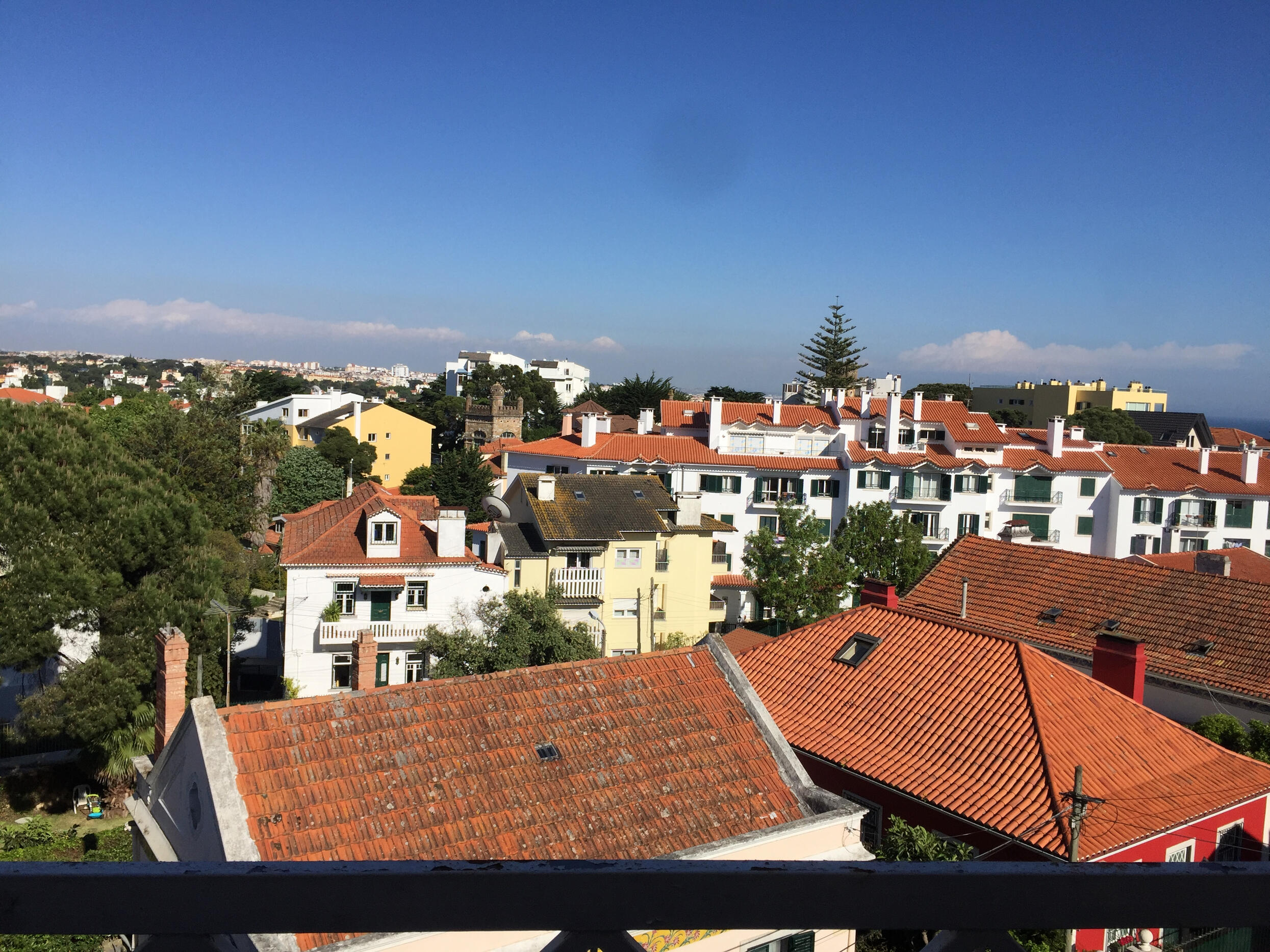
Corporate Services
HR-Driven Visa & Compliance: Full legal management of work permits, residence, and family visas, ensuring corporate compliance.Benefits & Integration Coordination: Management of employee benefit packages, health insurance setup, and local integration support.Dedicated Onboarding Manager: A single point of contact for the company and the transferring executive for zero-friction service.Housing & Local Logistics: Accelerated home search (rental or purchase) and immediate setup of utilities (NIF, banking, etc.).

Health & Daily Life
From healthcare registration and education to everyday essentials, we help you settle into life in Portugal with confidence.
Our service extends far beyond legal and housing logistics. We focus on the critical human details that transform a successful relocation into a thriving life. We guarantee a smooth transition for the whole family, ensuring you feel connected, confident, and cared for, every day.We cover all key pillars: Family & Education (from school search and enrolment to specialized family support); Cultural & Local Integration (providing local orientation, language tutoring, and community networking); and Dedicated Concierge support. Your concierge acts as your personal, on-call expert, providing instant, confidential support for all lifestyle needs—from premium bookings and travel logistics to urgent home service coordination, via a direct line.

Text
Golden Visa & Qualified Investment
Residence in Portugal through qualifying investmentPortugal's Residence Permit for Investment Activity — ARI, commonly known as the Golden Visa — remains available to qualifying non-EU investors.The programme has changed significantly in recent years.Real estate investment is no longer an eligible Golden Visa route.Today's programme is focused on qualifying investment in areas such as Portuguese businesses, non-real-estate investment funds, scientific research, cultural activities and job creation.AllowMe helps coordinate the legal, investment, tax and practical elements of the process so that each part is considered before commitments are made.BOOK A FREE 15-MINUTE DISCOVERY CALL---Current Qualifying RoutesDepending on the circumstances, the ARI programme currently includes routes based on:Investment FundsA minimum investment of €500,000 in qualifying non-real-estate collective investment vehicles established under Portuguese law and meeting the statutory requirements.Scientific ResearchA qualifying investment of generally €500,000 in scientific or technological research.Arts & Cultural HeritageA qualifying investment of generally €250,000 in artistic production or the recovery and maintenance of Portuguese cultural heritage.Job CreationCreation of at least 10 jobs, subject to the applicable statutory requirements.Investment in a Portuguese CompanyA qualifying investment of generally €500,000, combined with the creation or maintenance of the required permanent employment positions.The appropriate route depends on your objectives, investment profile and individual circumstances.---Why Investors Still Consider the Golden VisaUnlike most ordinary residence routes, the ARI is designed for applicants who do not intend to live permanently in Portugal from the outset.Its principal features include:* no requirement to obtain a residence visa before entering the ARI process;
* relatively limited minimum physical presence in Portugal;
* family reunification possibilities;
* access to residence and work in Portugal;
* travel within the Schengen Area under the applicable rules;
* the possibility of later applying for permanent residence or Portuguese nationality, subject to the legal requirements in force at that time.The minimum stay is generally 7 days during the first year and 14 days during each subsequent two-year period.---Investment First? Not Quite.A Golden Visa investment should be assessed from more than one perspective.Before committing capital, we believe four separate questions should be considered:Does the investment qualify for the ARI?Is the investment itself commercially appropriate for you?What are the tax consequences in Portugal and in your country of residence or nationality?Does the structure fit your longer-term residence and family plans?An investment can satisfy immigration rules without necessarily being the right financial or tax choice.That distinction matters.---Independent Investment and Financial AdviceAllowMe does not treat immigration eligibility as investment advice.Where financial or investment assessment is required, we coordinate with appropriately authorised investment professionals and regulated entities.Legal review of the ARI structure and application is carried out separately by a Portuguese lawyer.This means the immigration, legal and investment aspects can be coordinated without confusing their respective professional roles.---U.S. Investors: PFIC and QEF ConsiderationsU.S. investors require an additional layer of analysis.An investment in a Portuguese or other non-U.S. fund may potentially fall within the U.S. Passive Foreign Investment Company — PFIC rules.Depending on the investment and the investor's circumstances, a Qualified Electing Fund — QEF election or another U.S. tax treatment may be relevant.There is no one-size-fits-all solution.For U.S. clients, we can coordinate the process with an appropriate U.S. cross-border tax specialist before an investment decision is made.Immigration eligibility and U.S. tax suitability should be assessed separately.---How We Support the ProcessDepending on your needs, the coordinated process may include:* initial ARI eligibility assessment;
* comparison of the available qualifying routes;
* coordination with authorised investment professionals and financial institutions;
* legal review of the proposed ARI structure;
* preparation and organisation of the required documentation;
* NIF and Portuguese banking coordination where required;
* application through the ARI platform;
* family reunification applications;
* coordination of AIMA requirements and biometrics;
* renewal support;
* ongoing coordination with legal, tax and investment professionals.The objective is not simply to submit an application.It is to make sure the different decisions behind the application fit together.---Professional FeesARI / Golden Visa Legal Assistance€3,500 – €5,900The applicable fee depends on the investment route, number of applicants, documentation, family circumstances and legal complexity of the case.Investment amounts, government charges, banking costs, fund or investment fees, tax advice and other third-party professional costs are separate.---Considering the Portuguese Golden Visa?Before choosing a fund, investment structure or other qualifying route, it is worth establishing whether the ARI itself fits your objectives.Tell us:* where you currently live;
* your nationality;
* whether family members will be included;
* your preferred investment approach, if already known;
* and what you want Portuguese residence to achieve for you.We can then identify the appropriate professional and practical next stepsBOOK A FREE 15-MINUTE DISCOVERY CALL
U.S. INVESTOR ALERT: The PFIC Risk is Real.
With the end of the NHR, the focus of your Golden Visa investment must now be risk management, not just tax reduction.The Threat: Without precise structuring, your Capital Fund (FCR) can be classified as a PFIC (Passive Foreign Investment Company) by the IRS, exposing your investment to crippling U.S. tax penalties (up to 37% plus interest).The Solution: AllowMe provides unmatched value by securing the mandatory QEF (Qualified Electing Fund) Guarantee. We perform the necessary fund due diligence and coordinate your annual IRS Form 8621 filing with cross-border specialists.Do not invest without the QEF Guarantee.Next Step: BOOK YOUR STRATEGY SESSION to discuss your risk profile.




Move & Settle in Portugal
Your move is more than a visa. We help make Portugal work from day one.Finding the right home, opening a bank account, organising utilities, dealing with local administration, healthcare, schools and all the small decisions that appear before and after arrival can quickly turn an exciting move into a full-time project.AllowMe coordinates the practical side of your relocation so you can focus on the life you are moving here to build.Whether you need help with a few essential steps or prefer someone locally to coordinate the whole transition, we adapt the support to your circumstances.BOOK A FREE 15-MINUTE DISCOVERY CALL---# Before You MoveThe easiest relocations start before the flight.We can help you organise the practical steps that make sense to complete in advance and prepare those that depend on your arrival.Depending on your situation, this may include:* NIF and initial administrative setup;
* Portuguese banking;
* planning the housing search;
* coordination with landlords, agents and service providers;
* document preparation and local logistics;
* planning for schools, healthcare and family needs;
* establishing a realistic arrival and settling-in sequence.The objective is simple: arrive with fewer unknowns and fewer urgent problems waiting for you.---# Finding the Right HomeA home is often the biggest practical decision in a relocation.We can assist with the search for rental or purchase opportunities according to your location, lifestyle, family and budget, liaise with agents and landlords and help coordinate the process locally.Where appropriate, the legal aspects of a lease or property transaction can also be reviewed separately by a Portuguese lawyer.But finding a property is only part of the decision.Commute, schools, transport, neighbourhood, services and the kind of daily life you want in Portugal matter just as much.We help you choose a place to live — not simply a property.---# Essential SetupOnce you have a home, there is another layer of practical work.Depending on what you need, AllowMe can coordinate or assist with matters such as:* electricity, water and gas;
* internet and telecommunications;
* banking and direct debits;
* local administrative registrations;
* healthcare and SNS-related practicalities;
* Social Security matters where relevant;
* insurance coordination;
* driving and mobility arrangements;
* other essential local services.Not everybody needs everything.We identify what matters in your case and deal with it in the right order.---# Moving With Your FamilyA family move creates additional decisions — often before you arrive.Housing may depend on school choice. School choice may depend on location. Healthcare, transport and children's activities can also influence where everyday life works best.We can help coordinate the practical elements of the move so that they are considered together rather than one at a time.Because a successful family relocation is not simply getting everyone to Portugal.It is getting family life working again as quickly as possible.---# Your First Weeks in PortugalSome of the most frustrating relocation tasks only become visible after arrival.An internet installation that needs chasing.A utility contract that has not transferred correctly.A public service that requires another document.A landlord, bank or provider who needs something explained locally.This is where having someone in Portugal can make a very practical difference.We can remain available during the settling-in period to coordinate problems, communicate with providers and help you navigate everyday administration.---# Choose the Level of Support You Need## Essential RelocationFor clients who primarily need the fundamental administrative and practical setup for life in Portugal.From €950---## Integrated MoveFor clients who want broader support with housing, arrival and the practical organisation of their new life.From €1,500---## Lifestyle & IntegrationFor clients who want ongoing local support after the move, including practical coordination, Property Care and day-to-day assistance.From €850/month---You do not have to decide which package you need before speaking with us.Often, the first useful step is simply understanding what you can comfortably manage yourself — and where having someone locally will save you time, uncertainty and unnecessary travel.---# Local Support. Personal Attention.AllowMe is deliberately not a high-volume relocation operation.Every move is different.Some clients arrive alone with two suitcases.Others move with children, pets, furniture, investments and several months of planning behind them.Some want us to handle almost everything.Others just need the right person for one difficult step.Our role is to make the process feel manageable, personal and properly coordinated.---# Planning Your Move to Portugal?Tell us where you are moving from, who is coming with you, approximately when you plan to arrive and what you already have organised.We will help you identify where AllowMe can make the move easier.BOOK A FREE 15-MINUTE DISCOVERY CALLPortugal does not need to feel complicated before it has even become home.





Text